

I actually found myself depressed as 5pm rolled around and the number of people at the cafe thinned out. The guys next to me moved to another empty table where they’d have more room to spread out and discuss whatever Internet venture they were concocting, one guy a very obviously-artsy type and the other, with his laptop, moved and dressed like a prototypical modern nerd: khakis and a colored button-down with comfortable shoes, and practical, monotone-rimmed glasses, all covering his smooth, mocha skin and slight frame.
I gathered my things as the guys were readying themselves to move, feeling a dank heaviness in my stomach and a thickness building in my head. I didn’t want to leave, but what was I going to do? Move in here? I’d been at the cafe all afternoon, reading and highlighting my journals in a long-overdue task from The Artist’s Way, feeding off the ambiance of this corner of the reclaimed warehouse that is The Jane, sipping really good pour-over coffee and a mediocre Americano and a plastic restaurant-style juice-cup of water, nibbling extraordinary French butter cookies called sablés. And trying to write while watching people come and go.
I’m not really a people-watching kind of person, in that I don’t deliberately go out to watch people. I’d rather be more active in just about any circumstance, and this case was no different: I listened to conversations between business people, between a father and his two young children, between the baristas and bakers, and I wished I had some reason to be involved. I’d rather be conversing with any of them on just about any level instead of sitting alone in this incredibly-cool coffeehouse, rather than watching slightly-enviously the stylish girl at the table next to me as she typed away on her Macbook, somewhat snobbishly-resistant to the rest of the world and projecting enough of a sense that she didn’t really care what anyone else was doing.


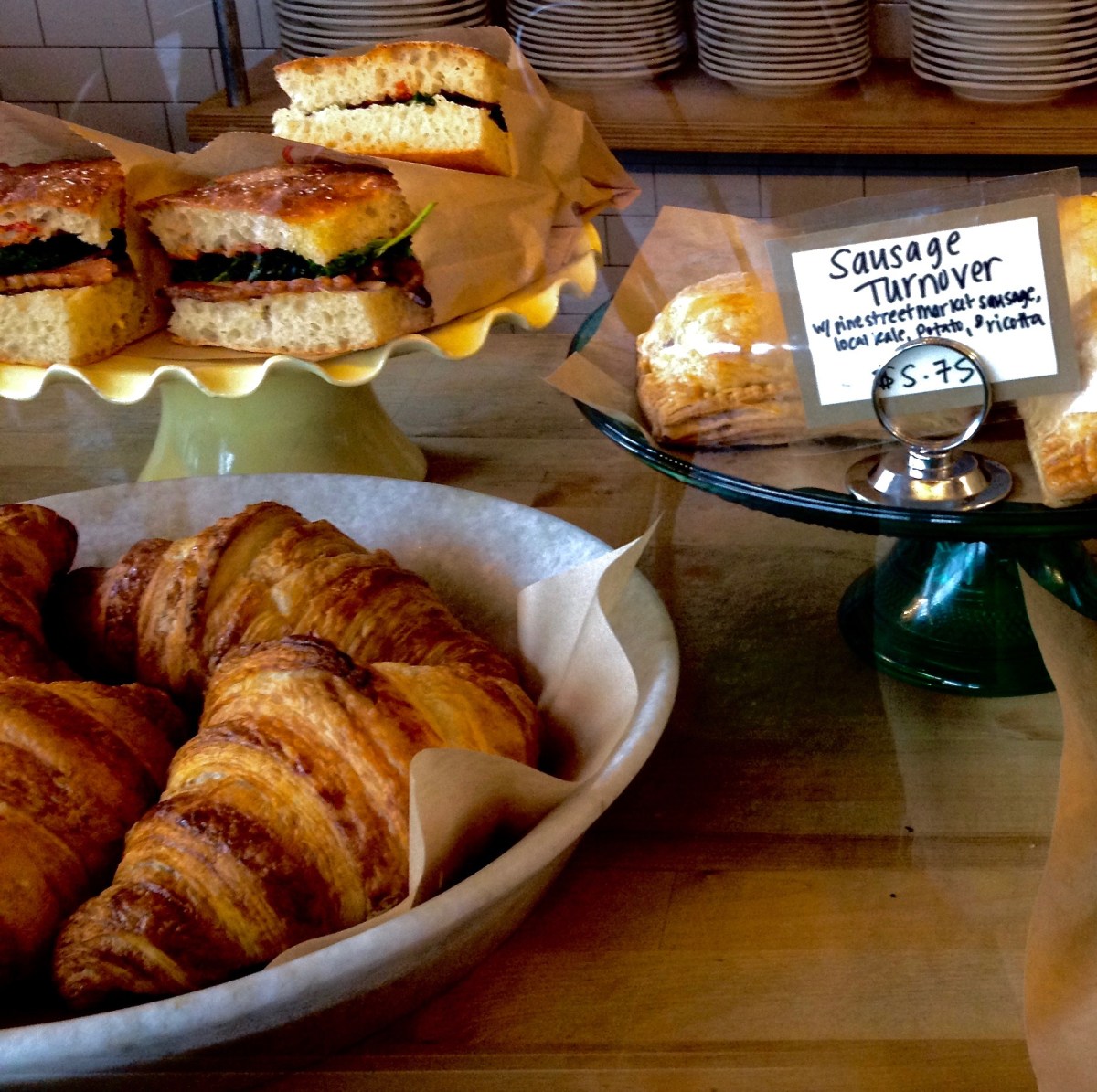
I, on the other hand, was far too aware of the entire scene. The buttery pastries being rolled and cut on the corner-counter by two cute college-aged girls lured me, as I know enough about baking to love the task of it, to hunger as I watched for more knowledge about baking such fine pastries as these. The melded scents of toasted flour, caramelized sugar and melted butter wafted from the kitchen and through the room in a constant, unmistakable fragrance, tickling familiar memories of joy. I sipped my pour-over and watched the baristas playfully drizzling hot streams of water over filters full of ground coffee beans, two boys and their fun, transforming mud-colored grounds into addictively-acidic, bittersweet cups of black coffee.
My eyes found fascination drinking in every aspect of this cafe, wherever I gazed: at long, manila-colored wooden counters; at the age-pocked concrete floor that groped persistently its antique green paint; at huge, antique-framed mirrors hanging in portrait behind the pastry counter and tilted in landscape above the registers. Cute souvenirs are arranged attractively near the pastry counter: bags and coffee cups and more; and, under the registers one can find pour-over kettles and stands identical to the ones used by Octane’s baristas, and fanned-out copies of my favorite local foodie journal, Brother.


The thought gripped me as surprisingly as it did strongly: I wanted to work here; the feeling followed firmly that I would not. This was a place for me to enjoy; but with every moment of enjoyment, I craved that the moment would continue longer than it would. Everyone enjoying his or her coffee here was a part of this place, a part of this community, and I was not. I was a stranger, a visitor, even if the baristas and bakers were kind to me: I lived in the ‘burbs, an hour away, and everyone here was within walking distance, within biking distance, within short driving distance. They belonged.
I realized, later, how much it reminded me of the coffeehouses in my former home of Hamilton, Ontario: artsy, hip places with such a fun vibe and shabby-chic decor; only this was more friendly, more open, with much better quality goods. It was all I ever wanted in a coffeehouse and more, and so inaccessible to me in the ways I most wanted.

I finished my Americano and my cup of water, savored several bites of a lavender-lemon sablé as the unusual floral scent filled my palate unexpectedly every time, and left half of the delicious cookie in the 9” metal cake pan acting as a plate, wondering why I would do such a thing.
But I gathered my bag and slipped out from behind the table along the giant roll-up door with large windowpanes, savoring for the last time that day the wrap-around bar and tall case full of liquors that I noticed only halfway through my stay, admiring the remarkable transformation passion can achieve, especially in a corner of Atlanta once dangerous enough that none of these people would spend hours, as they did regularly, in this corner of this warehouse.
As I stepped from the glass-framed entranceway and into the light of an overcast sky, I knew why I’d left that half of the most exquisitely unique cookie I’d ever tasted:
I was leaving a piece for the gods to savor, as I recall some culture was said to leave the last sip in their glass.
And, since I am the only god I believe in, I knew I’d be back, to have another one.
*Edited 4/10/2014: Thanks to The Little Tart’s General Manager, Sarah, who corrected me. The name of the exquisite cookies I enjoyed are “sablés”, not “santés”.

 Oceans of Mine