Just living is not enough… one must have sunshine, freedom, and a little flower.
Category: Appreciate
Sometimes words aren’t enough.
The main thing is, pay attention. Pay close attention to everything, everything you see. Notice what no one else notices, and you’ll know what no one else knows. What you get is what you get. What you do with what you get, that’s more the point.

In the Hellenistic period, artists were interested in more than just standard ideal figures. Bronze—surpassing marble with its tensile strength, reflective effects, and ability to hold fine detail—was employed for dynamic compositions, dazzling displays of the nude body, and graphic expressions of age and character.
This image is of an athlete, fresh from competition, with a realistic disheveled head of hair. The finely chiseled strands are swept up and around in different directions creating this dynamic hairstyle.
Now on view in “Power and Pathos” at the Getty Center through November 1.
Statue of an Athlete (Apoxyomenos), A.D. 1-90. Kunsthistorisches Museum Wien, Antikensammlung. Image courtesy of and © KHM-Museumsverband. Collection of Greek and Roman Antiquities / Ephesos Museum
We have to create.
It is the only thing louder than destruction.
There is no one right way to live.
Daniel Quinn, Ishmael (via fyp-philosophy)
She scares the hell out of me and calms my soul at the same time. Maybe that’s what love is—a total contradiction that somehow balances out.
Don’t lose heart if it’s very difficult at times, everything will come out all right and nobody can in the beginning do as he wishes.
That’s the thing with magic. You’ve got to know it’s still here, all around us, or it just stays invisible for you.
合縁奇縁 | aienkien
(noun) A Japanese untranslatable idiom, aienkien is defined as an expression used to describe an uncanny relationship. It characterizes a couple who met by a quirk of fate, but are strangely happy and deeply bonded by their unusual attraction and course of destiny.
(via wordsnquotes)
(via wordsnquotes)
she doesn’t belong to anyone and i think that’s the most divine thing about her. she’s found love within herself and she’s complete alone.
iambrillyant (via wnq-writers)
All art comes from terrific failures and terrific needs that we have. It is about the difficulty of being a self because one is neglected. Everywhere in the modern world there is neglect, the need to be recognised, which is not satisfied. Art is a way of recognising oneself.
Louise Bourgeois (via wnq-art)
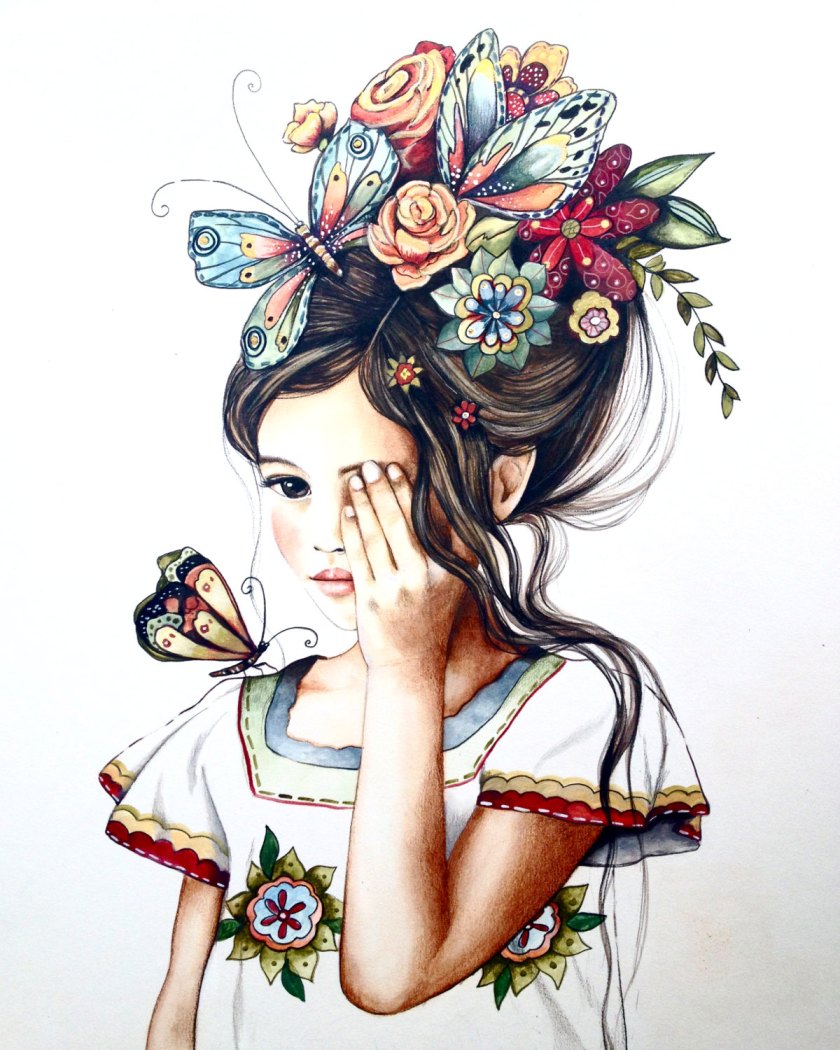
Stallion
I am but a girl
Hiding
Peeking ‘round the fence of your vast lands
Mesmerized by the expanses of its beauty
In wonder at the luxuriousness of your soul
Afraid
To trespass, uninvited, unwelcomed;
Desperate
To wander barefoot through soft hills.
I watch a silken stallion await
So proud and measured, so unaware,
Prance, restrained before me
Lean legs stepping, dancing restlessly
He longs to move, to run,
To carry swiftly through the wind
In breeding bound in duality
Trained, obedient, elegant; yet, unfree
His dancing feet and impatient mane
Betray the wild nature of his heart.
I long to set my fingers on his cheek
To gently slide bit and bridle from his mouth
To stroke his firm, soft body as I move
Unbinding him from the fruits of expectation
Then watch
As he suddenly realizes he is free
And weep to see him bolt into full flight
And laugh to see him dance upon the wind
And hope that he will return to me again.
The Plant Whisperers
Maybe it’s because I am one generation from farmers, on one side, and two, on the other.
Maybe it’s that I was raised traveling north to my grandparents’ and great-grandmother’s farms in rural Indiana, going south to my great-grandfather’s and great-aunts’ farms in south Georgia.
Maybe it was the mystique of soft whispers from the soybean and corn fields, of the giant pecan trees that dropped delicious gifts for us to gather, of ever-ripening pear trees, of the grapefruit and lime trees in the back yard of my grandparents’ Florida home, of miles of sweet-scented orange groves in the sandy plains surrounding.
Maybe it was the grove-side stands that sold the sweetest orange juice I’d ever tasted, the road-side shacks with delicious, hot boiled peanuts, fruit, corn, honey – even a few miles from our Georgia home.
Or maybe it’s the simple honesty of farmers I encountered that instilled in me an eternal love, respect and gratitude for those who till their acres, plant and tend their crops, offer food for sale in humble ways, gift them to neighbors and friends.
In Ontario, years later, I had the opportunity to work at a few farmers markets, selling freshly-baked artisan breads, pies and muffins for the restaurant where I worked. I didn’t make much money doing it; I could have easily earned thrice what I earned while setting up and standing for hours on a large patch of grass or in a gravel driveway, repeating, tick-tick-tick, the seven or eight varieties of breads and pies to inquiring passers-by. But it was beautiful; I loved every minute.
I’d sell out regularly, our bread was that good. When I’d sold out, or nearly so, I’d walk the patch and visit the other sellers: farmers with tables laden with fruits and vegetables familiar and not-well-known. I was a child, standing at their tables, as childish as the small ones who’d come to my table, eyes wide and excited at our fruit pies and apple-cider muffins, at our bountiful breads. For me, it was the colors, the piles of leaves and rolling mounds of fruits, tomatoes, tomatillos, corn, squash, varietals of mushrooms – all things I could put together, cooked or raw, and create something to make my imagination and my palate explode with something new, delicious.
I was as shy as any other customer, perhaps more so, since I was a neighbor and understood the value of their precious time, when I knew I’d pay less because I was a neighboring vendor in this community, and that is what is done. But I wanted nothing more than to stand, as any regular customer, admiring their bounties, loving them for the time they’d spent caring for these plants, for nurturing their soil despite the difficulties, despite the minimal pay.
I wanted to buy everything they had and knew I had neither funds to do so nor mouths enough to feed. So my mind would race as I stood spellbound, letting others pass before me as I let my palate choose for me, salivating over the ground cherries this week, the tomatillos and onions and garlic in a dream of fresh green salsa the next.
Only a few truly understood my great love and respect, I think: the apple farmer who always looked a touch grumpy, who sold his apples for $5 a pint and always had so many left, whose fresh, thick apple cider he sold for $6 a gallon and was the most delicious thing I’d ever tasted – all the sweet, honeyed goodness of a freshly-picked apple pouring endlessly into my mouth, with none of the time lost on chewing. I bought apples and cider from him every week; I’d look him in the eyes and tell him “Thank you” and he’d look on to me curiously from beneath his disappointed shroud and thank me back.
And Russ, Mr. Happy-Farmer himself, founder and owner of Hamilton’s Backyard Harvest, who befriended me on one slow afternoon filled with the vigorous-but-friendly banter of my libertarian views while I challenged the German cheesemonger’s more liberal ones; Russ of the always-naturally-grown vegetables, of squash and melons and tomatoes you’d never before seen that tasted as good as the prices you’d pay – which were not too much, but were never “cheap.” I always felt I was getting a steal, walking home in the early Thursday evenings, laden with $50-worth of vegetables and fruits in re-usable bags from Russ and the other two or three farmers, most of which was organic.
Russ would teach me about growing while he could, between pleased customers whose names he always knew, whose hugs he’d always earned. Russ is an entrepreneur and a musician, complex and freshly antique in his reserved openness, in his beatnick-hippie ways and bright, observant eyes – as complex as the flavors of some of the fruits and vegetables he grows in the city’s neighborhood backyards, working the soil for people who want vegetable gardens and have no time to tend them, earning his keep from the harvest he sells as his only payment for tending them. Novel, beautiful, I thought.
There is a stillness in the minds of farmers, a grasp of things that no one seems to see. These are the plant whisperers, who urge a seed to grow, to take itself upon green wings and fly into the sky though rooted to the ground, to bloom in fragrant flowers and carry heavy loads of plump fruit upon thin stalks and vines. These are the ones who know the sun and the wind, the clouds and the rain; who know the many bugs in the ground and the animals around; who feed all of humanity with more than sustenance. These are the friends of chefs, of cooks, of mothers and children; these are the founders of society and beginning of art and beauty. These are the original creators – these farmers who take neither too much nor too little upon themselves to deliver up to us their bounties, but work from dusk til dawn, from the beginnings of civilization through to today.
It is no wonder they worship, so many of them; that they give thanks to whatever spirit blesses their fields, for their gratitude and humble care is translated in every stalk of heirloom wheat, in every fat and multicolored tomato that tastes as good by itself as the most exquisite dish, is evinced in the makings of masterpieces.
They worship the sun and the rain, the soil and the seed; are grateful to spirit and land.
And I feel the same, once removed: my gratitude, my heart is with them.

Too Close to Move
…It’s an experience. Music is always an experience, for me.
I’d shared Alex Clare’s “Too Close” video; my interlocutor is in Europe and hadn’t seen it, hadn’t heard the song. Not unusual, since so much of US pop isn’t necessarily popular in Europe at exactly the same time. And he’s constantly working; I doubt he hears much music that he doesn’t choose.
“So, the melody, tone, harmony/chime?” he asked, alluding to how music hits me, to why this particular song moves me, curious as to why I would choose to share this with him.
He still hadn’t heard it; with the restrictions on YouTube videos differing in Europe from North America, this version was off-limits.
“Everything,” I replied, listening for the fourth or fifth time already, watching, rapt as Alex gradually let loose his soul upon my ears.
“Everything hits me. His depth, his tone, his melody, the corresponding harmonies, beats…”
The video’s director is genius: two warriors strike each other in time with Alex’s soulful melodies, and I feel myself shaken; I relate. I know that fight, that struggle to win against an opponent one knows, one loves so well.
“In this case,” I continue in time with the fight, “the video is striking, literally and figuratively, as well. So well-paired. So passionate.”
I adore passionate music. Alex Clare’s music simply sweeps me up; I find I can’t move except in time with his voice, with the pounding beats, with the calls his soul and the music demand. And I must move in time with those calls, those demands.
I sway, undulate, writhe, free myself in time with the music, even as I sit here, as I always do with such danceable, passionate stuff. I must move….
“I don’t care if it’s sad or not. There must be truth and passion,” I respond almost involuntarily, my mind flashing immediately to Jacques Brel’s “Ne Me Quitte Pas” and how it affected me so deeply when I first heard it, years ago, though I understood little of French.
I return to speak of Alex: “There’s so much truth and passion in this song; you can hear it in the way he sings it, in the rise and fall of the music…” …I listen again, held. He takes my heart, moves my body, grips my mind with his matter-of-fact words, with his tender statements-of-fact, with his perfect decision-in-indecision; I feel he speaks so much for me, for my half-lost relationships of the past, releases and explains so much with this song. “…In the changes of the tone, from more-or-less acoustic to electronic, the back-and-forth of it….
“It’s a song of great conflict, played out perfectly,” I analyze. “He’s decided, but he’s still greatly conflicted.” In awe at their skill and deftness, at their power and intent, and removed from the fight, I watch the well-timed dance of the two in black: “The video shows the same conflict, between the warriors.” They’re almost the same, but fighting each other, I realize. Even in the contrast between the shots of the warriors and the singer, them in black, him in white, it’s clear the conflict lies in Alex: he and the warriors, they’re two parts of a whole. “…And, of course, in a sense, I can relate to the words, to the meaning.”
I find myself revealing my life much more intimately:
…Songs like this literally pull their expression, my own interpretation, out of me.
I had a friend who was a DJ; I made friends with him on the basis of the music he most enjoyed playing and my response to the tracks he played. I used to go into this lounge at the bottom of a bar I frequented, he’d be playing music; the place was mostly – if not completely – empty when I arrived.
I’d go to the front of the room, near the DJ booth; there was a fireplace set in the wall and a very small dance floor before it. I’d start swaying to the music he played. He’d play music just for me – always his favorites, and they became my own: always soulful, always passionate, always moving my body for me, as if I had no control.
I’d close my eyes and forget about everything but the music.
I’d wind up loosening up, usually without any alcohol to assist, and flay my body rhythmically to the songwriter’s demands. I’d pour my emotions out on the floor, let my tensions flow free, expressed by every beat and rhythm and word in the depth of every song with soul; he loved to watch. So did others… one of the bartenders crushed hard on me because of my dancing.
When it would get busier, later in the night, I’d find guys and girls joining me until there was no room for me to move.
I’d smile and laugh and leave, go sit with the DJ and chat… because, by this time, he was playing Top 40s music instead of the passionate stuff I liked.
But my end was achieved: I’d had time and space to empty myself, burn my passion for a bit, and I’d brought the vibe of the place to a pitch where others were dancing, drinking, enjoying themselves more.
There were always some girls, and some guys, who would ask me where and how I learned to dance in such a way. One older gentleman was convinced that I’d been formally trained. He danced with me, was a fantastic partner. Danced with me in a formal way, led me; it was wonderful.
He was in his seventies.
…I miss it. There’s nowhere I feel comfortable exposing myself, here in Atlanta.
The guys here won’t allow me room to breathe, I’m sure of it. I’ll dance, and they’ll think I’m looking for a… bed-partner. They’ll crawl all over me, I’ll be miserable. I always have to have a bodyguard – when I dance in this way.
At that lounge, I had two: the DJ and the bartender, plus all the girls who also worked there. Not to mention that it was a rich town, and people just didn’t mistreat girls, even if they were throwing their hips, their arms, their bodies around as I did…
…These are my lyrics to this song. These are my responses, the movements of my own conflict, my own desire to be, and my decision not to be – with men I’ve loved, with places of work I’ve loved, even with dancing in public and expressing myself in such visual, tangible ways; but inside me, my heart still loves, my body yet yearns to move, to let free the expanse I feel in response to Alex Clare’s songs, in response to his passion that is so familiar…
And, when I hear him, see him pulled by the intensity of his music, I move, can’t help but move, find a place to move. That love, that passion we feel must escape somewhere, must have expression, even if elsewhere it’s just too close to move.
The Tao of Krazy::The Way of Love

I forget, sometimes, what wealth there is in the world, and how very many things inspire me, have inspired me through the years – and inspire me still, when I remember them.
George Herriman’s Krazy Kat is one of them….
I drank up Krazy, when I first laid my hands on our copy of The Art of George Herriman. I drank in the images, drank in Herriman’s love for his creations, drank in Krazy’s complete adoration of Ignatz, drank in Ignatz’s utter – if crazy – love of the Kat.
(Krazy, I understand; I’m a bit krazy, myself, when I’m in love… Which is usually. …Erm… always. Ignatz, though… Well, don’t we always love enigmas?)
I thirsted for this reflection, for this justification, for this legitimization of life; and Herriman’s dry wit and charming rapports were, and always are, a refreshing, delicious tonic.
I have, at times since, dared new acquaintenances with one of the more …passionate expressions of Ignatz’s and Krazy’s love, testing their sensitivity to nuance; most all start, twist their faces in perfect alignment with their minds in the attempt to comprehend this very gentlest of arts.
I smile and reassure myself of my suspicions: they don’t know Love, don’t know how to Love.
I wonder if I should explain… as words are redundant, clumsy to those who understand and do little for those who don’t.
It is somewhat like the Tao Te Ching*: “The way that can be spoken is not the Way.”
But, they did try to explain, in the Tao; so I shall, too, in my way,though you must be still to hear…:
Love is everything.
Love is quietly listening to birds waking on a foggy, still-dark morning, the cool air seeping in through the windows and chilling fingers, kissing arms….
Love is writing when no one can hear you, never knowing if anyone will understand you, spilling words onto paper, onto an ethereal page-of-sorts just to let go the flow of words, to portray the passion….
Love is hopeless, miles-away and timeless connection,
The mind’s eye wide, ears ever-pricked, heart stretched out to caress a quarter-, even half-a-world away….
Love is a thousand questions held infinitely ’til answered, a million questions asked and refined, a single question answered and known….
…Love is a cat in love with a mouse, and he in love with her, and the ever-expected brick that flies between.
…I could try harder, write more….
Or I can bask in the beauty that is this cool morning, in the tides of such quiet mornings that are yet captured in this art….
Thank you, George Herriman.
* This link to the Tao Te Ching is not the one I quote, though it is a more beautiful interpretation, and far more simple – and true to the concept of Love about which I write; the one I quote is from memory of a book whose translator I do not recall.
 Oceans of Mine